
- All Products
- Apparel
- Auto, Home & Tools
- Awareness
- Bags
- Clearance
- Drinkware
- Event Decor
- Face On It
- Food & Candy
- Hats
- Holidays
- Keychains
- Lanyards & Badges
- Office & Awards
- Outdoor & Leisure
- Paper Printing
- Pins, Buttons & Patches
- Print Supplies
- Shipping Supplies
- Technology
- Toys & Novelty
- Trade Show & Signage
- Wellness & Safety
- Wristbands
- Writing
Custom Brochure And Pamphlet Printing
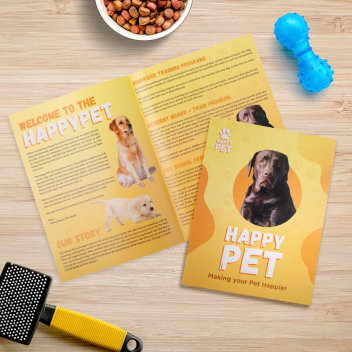
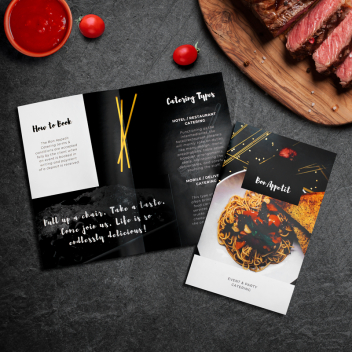
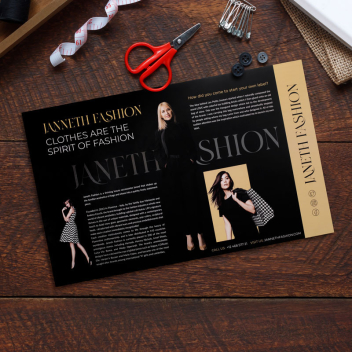
Custom Brochures & Pamphlet Printing
Create professional custom brochures that make it easy to share your business, products, services, events, or promotions in a compact printed format. Imprint offers full-color brochure printing in multiple sizes with customizable paper and folding options, so you can create brochures for trade shows, sales presentations, menus, real estate marketing, product guides, events, and everyday business promotion.
Upload your own artwork or personalize your brochure design, choose the size and folding style that fits your content, and order the quantity you need.
Shop Custom Brochures by Size
Choosing the right brochure size depends on how much information you need to present, how the brochure will be distributed, and the folding style you plan to use.
|
Brochure Size |
Best For |
Why Choose It |
|
8.5" × 11" |
General marketing, menus, service guides, events |
A versatile standard size for everyday brochure printing |
|
8.5" × 14" |
Detailed service information, programs, menus |
Provides additional space while remaining easy to distribute |
|
11" × 17" |
Product guides, presentations, detailed marketing |
Offers more room for images, specifications, pricing, and longer content |
8.5" × 11" Brochures
The 8.5" × 11" brochure is a versatile choice for businesses, organizations, and events. Its familiar letter-size format provides enough room for company information, images, offers, contact details, and calls to action while remaining convenient to hand out or display.
Best for: company brochures, service menus, real estate marketing, event handouts, educational materials, sales collateral, and promotional campaigns.
8.5" × 14" Brochures
Choose an 8.5" × 14" brochure when you need more room than a standard letter-size brochure without moving to a large-format option. The additional space works well for businesses presenting multiple services, detailed menus, schedules, programs, or information that benefits from extra panels.
Best for: restaurant menus, service lists, event programs, detailed sales materials, educational information, and hospitality marketing.
11" × 17" Brochures
An 11" × 17" brochure provides substantially more space for detailed information, larger photographs, product collections, charts, pricing, or multiple sections. It is a strong choice when visual presentation and information density are equally important.
Best for: product catalogs, sales presentations, property information, tourism materials, large menus, product launches, and detailed marketing campaigns.
What Are Custom Brochures?
Custom brochures are printed marketing materials personalized with your business name, logo, images, messaging, contact information, products, services, or promotional offers.
Unlike a simple flyer, a folded brochure can divide information into clearly defined panels. This makes it easier to organize your message into sections such as an introduction, products or services, benefits, pricing, testimonials, contact information, and a call to action.
Businesses can use brochures as standalone marketing materials or combine them with business cards, presentation folders, postcards, banners, and other printed promotional products.
What Are Brochures Used For?
Brochures are useful whenever you need to communicate more information than can comfortably fit on a business card, postcard, or simple promotional handout.
Common brochure uses include:
- Introducing a company and its services
- Explaining products or product collections
- Promoting special offers
- Providing restaurant or service menus
- Marketing real estate properties
- Sharing event schedules and programs
- Providing information at trade shows
- Creating tourism and hospitality guides
- Presenting educational or nonprofit information
- Supporting sales representatives and presentations
- Displaying pricing or service packages
- Providing take-home information to prospective customers
Because brochures are portable, they can be handed directly to customers, included in presentation materials, displayed at reception areas, distributed at events, or added to promotional packages.
How to Choose the Right Brochure
Start by considering how much information your brochure needs to communicate.
Choose Your Brochure Size
An 8.5" × 11" brochure works well for most everyday marketing applications. Choose 8.5" × 14" when your content requires additional room, or 11" × 17" when you need space for larger images, detailed information, or multiple content sections.
Choose Your Paper
Your paper selection affects both the appearance and feel of the finished brochure. Consider how the brochure will be distributed, how long recipients are likely to keep it, and whether your design relies heavily on photographs, graphics, or text.
Choose Your Folding Style
The fold determines how your brochure is divided into panels and how readers move through the information.
Available folding configurations can include options such as half folds, gate folds, accordion-style folds, parallel folds, and other multi-panel formats depending on the selected brochure.
Organize Your Content
Treat each brochure panel as a specific section of the story.
A simple structure could include:
Front panel: Business name, headline, image, or primary offer
Inside panels: Products, services, benefits, supporting information, photographs, or pricing
Back panel: Contact details, website, address, QR code, and call to action
5. Add Your Branding
Include recognizable brand elements such as your logo, brand colors, typography, photography, website, and contact information. Keeping these elements consistent helps your brochure match your other marketing materials.
Popular Brochure Folding Options
Different brochure folds organize information in different ways.
|
Folding Style |
Best For |
|
Half Fold |
Presentations, menus, simple product or service information |
|
Accordion Fold |
Step-by-step information, timelines, maps, and multi-section content |
|
Gate Fold |
Visual reveals, premium presentations, and image-focused designs |
|
Double Gate Fold |
Detailed presentations requiring multiple panels |
|
Double Parallel Fold |
Information-heavy brochures and compact guides |
|
French Fold |
Posters, maps, event materials, and visual layouts |
The best fold depends on your brochure size, design, number of sections, and how you want readers to experience the information.
Brochures vs. Flyers: What's the Difference?
Brochures and flyers are both printed marketing tools, but they are typically used differently.
|
Brochures |
Flyers |
|
Often folded into multiple panels |
Usually distributed flat |
|
Better suited to detailed information |
Better suited to short messages |
|
Can organize several topics or sections |
Usually focuses on one primary message |
|
Common for products, services, menus, and company information |
Common for announcements, promotions, and events |
|
Designed for readers to explore multiple sections |
Designed for quick scanning |
Choose a brochure when your audience needs more context or information before taking action. Choose a flyer when the goal is to communicate one simple message quickly.
Who Uses Custom Brochures?
Small Businesses
Small businesses can use brochures to explain services, pricing, packages, company information, and special offers.
Restaurants and Hospitality Businesses
Restaurants, hotels, resorts, and tourism businesses can create brochures for menus, amenities, local attractions, packages, and guest information.
Real Estate Professionals
Agents and property managers can use brochures to showcase listings, property photographs, features, floor plans, and contact information.
Trade Shows and Events
Brochures provide attendees with information they can take home after speaking with your team at a booth, exhibition, conference, or networking event.
Schools and Universities
Educational organizations can distribute brochures containing program information, admissions details, campus resources, schedules, or event information.
Nonprofits and Community Organizations
Organizations can use brochures to explain their mission, programs, fundraising campaigns, volunteer opportunities, and community services.
Healthcare and Professional Services
Clinics, dental practices, financial professionals, consultants, and other service providers can use brochures to explain services and provide useful information to clients.
How to Design an Effective Brochure
A good brochure should make its main message understandable within seconds while providing enough detail for readers who want to learn more.
Use a clear headline on the front panel and establish a visual hierarchy throughout the design. Important information should be easy to identify without reading every line.
Keep paragraphs relatively short, use descriptive headings, and separate complex information with bullet points where appropriate.
Use high-quality images and make sure text remains readable against the background.
Most importantly, include a clear next step.
Depending on your goal, your call to action might encourage readers to:
- Visit your website
- Scan a QR code
- Request a quote
- Schedule an appointment
- Visit a location
- Call your business
- Register for an event
- Redeem an offer
- Contact a sales representative
Why Print Brochures for Your Business?
Printed brochures give customers something physical they can reference after interacting with your business.
They are particularly useful when a buying decision requires more explanation than can fit on a small promotional item. A brochure can combine your brand story, products, benefits, images, specifications, pricing, and contact information in one organized piece.
Brochures can also complement digital marketing. Adding your website, social media information, promotional URL, or QR code creates a direct path from printed material to your online experience.
Frequently Asked Questions About Custom Brochures
What is a custom brochure?
A custom brochure is a printed marketing piece personalized with your own design, branding, images, text, products, services, or promotional information. Brochures are commonly folded into panels to organize information and make the piece easier to read.
What brochure sizes are available?
Imprint offers brochures in 8.5" × 11", 8.5" × 14", and 11" × 17" sizes. The best size depends on the amount of information, images, and panels required for your design.
What is the most common brochure size?
An 8.5" × 11" brochure is a versatile choice because it uses the familiar dimensions of standard letter-size paper while providing enough room for several sections of marketing content.
What is the difference between a brochure and a pamphlet?
The terms are often used interchangeably. In marketing, both generally refer to printed materials designed to communicate information about a company, organization, product, service, event, or topic. Brochures are particularly associated with folded, multi-panel marketing pieces.
What should I put on a business brochure?
A business brochure should typically include your company name and logo, a clear headline, a short explanation of your products or services, key benefits, relevant images, contact information, and a clear call to action.
What is the best brochure size for a business?
For general business marketing, 8.5" × 11" is a versatile starting point. Businesses with more detailed information can consider 8.5" × 14" or 11" × 17" brochures for additional design space.
What brochure fold should I choose?
Choose your fold based on how much information you have and how you want readers to navigate it. Simple half folds work well for straightforward presentations, while multi-panel folding styles can organize larger amounts of information into distinct sections.
Can brochures be printed in full color?
Yes. Full-color brochure printing is well suited to designs containing company colors, photographs, illustrations, product images, logos, and other visual branding.
Are brochures good for trade shows?
Yes. Brochures are useful trade show materials because visitors can take detailed information about your company, products, or services with them after leaving your booth.
Are brochures good for real estate marketing?
Yes. Real estate brochures can provide room for property photographs, features, amenities, location information, floor plans, agent details, and calls to action in a single printed piece.
Are brochures still useful when a business has a website?
Yes. Printed brochures and websites can serve different stages of the customer journey. A brochure provides a physical reference while URLs and QR codes can direct interested customers to detailed online information.
How do I make my brochure easy to read?
Use descriptive headings, short sections, readable typography, clear images, sufficient white space, and a logical panel order. Avoid filling every available area with text.
What information should go on the front of a brochure?
The front should quickly communicate who you are and why someone should open the brochure. A business name or logo, concise headline, strong image, and key value proposition are good starting points.
What should go on the back of a brochure?
The back panel is commonly used for contact information, website details, business addresses, social media information, QR codes, disclaimers, or a final call to action.
How many brochures should I order?
The right quantity depends on how you plan to distribute them. Consider the number of locations, events, sales representatives, customers, or direct-mail recipients you need to cover, plus additional copies for future use.
How do I order custom brochures?
Choose your preferred brochure size, quantity, paper and folding options, then personalize the product with your artwork or design. Review the design and order details before submitting your brochure for printing.