

Lanyards are designed to be straightforward and perform their functions with relative ease. These functions may include holding onto items like your keys and ID cards, which the lanyard is ultimately perfect for. It is meant to hang straight and keep out of the way when worn properly, making them a simple yet very helpful accessory.
However, over time, certain factors may cause the cord on your lanyards to get tangled. Here are some common reasons why this could happen to your lanyard.
Twisting during Wear
As a hard and fast rule, if the lanyard is not hung straight down your chest or if you tie or bundle it up in your pocket, it may develop twists. Properly attaching and wearing your lanyard is a great way to prevent this.
Sometimes, however, you could end up with twisted lanyards even when they’re not in active use. This can be due to various factors such as how you store or handle your lanyards. Yes, how you store your lanyard matters. When you store them in a haphazard manner, they can end up being twisted over time.
Attachment Point
The attachment point refers to the part of the lanyard that enables you attach items such as an identification badge, key or other small objects. The type of attachment you use on these items can also determine if you end up with a twisted lanyard or not. For example, swivel hooks or clips are less likely to get tangled up, unlike, say, fixed attachments.
To that end, here are some key things to remember about attachment points when picking out your next lanyard:
- Swivel Hooks: Swivel hooks have a rotating mechanism that allows the attached item to rotate freely, reducing the chances of the lanyard getting twisted. Swivel hooks offer great flexibility and comfort during wear, which is why they are one of the most common types of lanyard attachment.
- Trigger Hooks: Trigger hooks are similar to swivel hooks but may have a more ergonomic design that makes it easy to clip and unclip items. They offer great ease of use and do a good job keeping your lanyard untangled.
- Split Rings: These are circular rings that can be attached to the lanyard. Items like keys or keychains can be looped through the split ring and secured that way. While split rings are in fact sturdy, they may not allow for as much movement as swivel hooks
Length and Weight
The length of a lanyard determines how far the attached item hangs from the wearer’s neck. A longer lanyard allows for easier access to the attached item, while a shorter lanyard keeps it closer to the body. This is something you have to keep in mind when picking out a lanyard.
The ideal lanyard length, of course, depends on personal comfort and preference. While some individuals may prefer longer lanyards that offer more flexibility and movement, others may prefer shorter ones that keep items closer to the body with less swinging.
The weight on a lanyard is just as important a factor when it comes to keeping it untangled. Heavier items may cause the lanyard to tilt or feel uneven during wear. More importantly, lanyards bearing heavier objects are sure to become uncomfortable to wear over an extended period. On the other hand, lighter items reduce strain on the neck and provide a more comfortable experience overall.
Quality of Lanyard
While some lanyards may still develop twists after a while of regular use, high-quality lanyards, maintained properly over time, have a fairly sturdy resistance to getting tangled up. Which is to say that the quality of a lanyard plays a significant role in its durability and overall functionality. High-quality lanyards are designed to withstand daily use, maintain their appearance over time and provide a comfortable and reliable experience.
High-quality lanyards are typically made from durable materials that are resistant to wear, tear and environmental factors. Common materials include nylon, polyester, and other synthetic fabrics that offer strength and longevity. Not only does the quality of material matter, the construction does too. Well-constructed lanyards feature precise stitching, secure attachments and reinforced seams, and these make all the difference. So, keep an eye on this when picking your next lanyard. The stitching should be even, and attachment points should be securely fastened to prevent accidental detachment.
How Do You Stop Your Lanyard from Twisting?
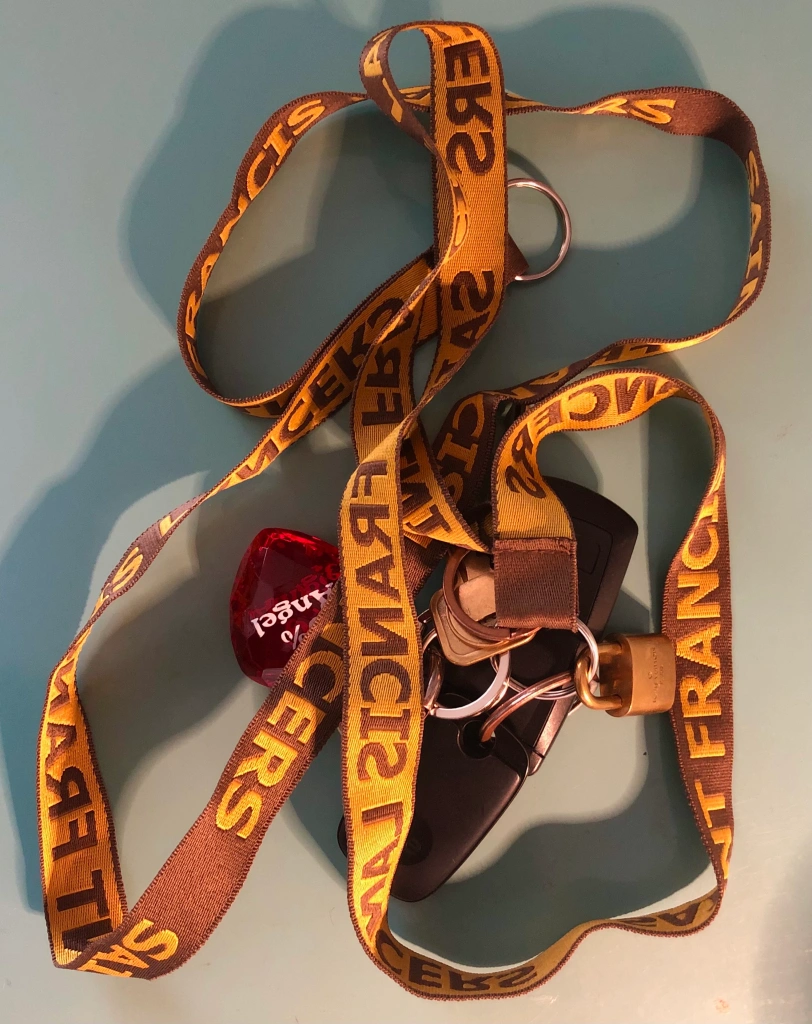
Twisted lanyards are in fact a common issue that might be out of your control. However, there are several ways to prevent or at least minimize it. Here are some tips:
- Use a Swivel Hook or Clip: Consider using lanyards with swivel hooks or clips at the attachment point. Swivel hooks allow the lanyard to rotate freely, from one side to the other, reducing the chances of it getting tangled.
- Choose a Wider Lanyard: Opt for lanyards with a wider strap or flat design. Wider lanyards tend to twist less than thinner ones due to their increased stability.
- Keep It Shorter: Longer lanyards are more likely to twist, so try using a shorter lanyard that keeps your ID badge or keys closer to your body.
- Untangle Regularly: Pay attention to your lanyard’s orientation whenever you hang it around your neck and untangle it as soon as you sense any twisting. This can help prevent the twisting problem from worsening.
- Attach Lighter Items: If your lanyard carries multiple items, try to attach lighter items near the attachment point. Remember, heavier items, when placed at the end of the lanyard, can cause more twisting. So, be mindful of the weight of whatever you attach to your lanyard.
By following these tips and taking care with how you store and use your lanyards, you can significantly reduce twisting and keep them in great working condition!